Jiangsu Xuben Photoelectric Technology Co., Ltd.
News

How Does Hollow Core Fibre Transform High-Speed Optical Communication?

2026-03-10 0 Leave me a message

Modern communication networks demand faster transmission speeds, lower latency, and higher signal quality. Traditional optical fibers have served global telecommunications for decades, but emerging technologies are pushing the limits of what solid-core fibers can achieve. One innovation gaining significant attention is Hollow Core Fibre. By allowing light to travel through air instead of solid glass, this advanced fiber technology offers major improvements in speed, efficiency, and performance.

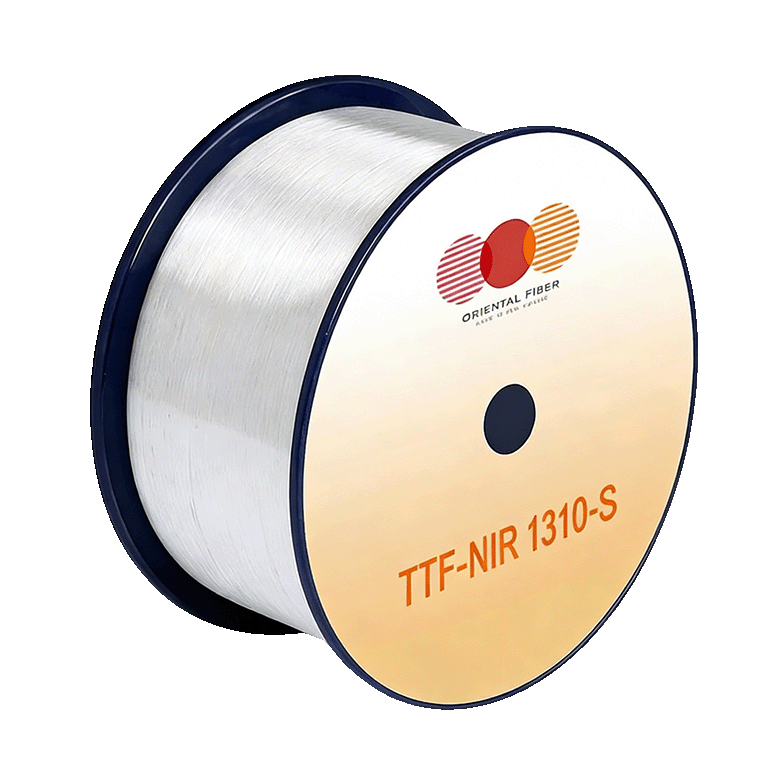
TTR-NIR 1310-S

Article Summary

Hollow Core Fibre represents a new generation of optical fiber technology where the central core is hollow rather than solid glass. This design allows light signals to propagate primarily through air, significantly reducing latency, signal distortion, and nonlinear optical effects. Compared with conventional fibers, Hollow Core Fibre can deliver faster transmission speeds and improved data capacity, making it highly suitable for modern data centers, high-frequency trading networks, and advanced telecommunications infrastructure. This article explains how Hollow Core Fibre works, its structural design, key advantages, applications, and how to choose reliable manufacturing solutions such as those offered by Xuben.


Table of Contents


1. What Is Hollow Core Fibre?

Hollow Core Fibre is a specialized type of optical fiber designed with an air-filled central core instead of a traditional solid glass core. In standard optical fibers, light travels through solid silica glass. However, Hollow Core Fibre guides light through an empty or gas-filled channel surrounded by micro-structured glass layers. :contentReference[oaicite:0]{index=0}

This structural change significantly alters the behavior of light transmission. Because light travels faster in air than in glass, signals transmitted through Hollow Core Fibre experience lower latency and reduced interaction with the fiber material.

In many modern network environments where every microsecond matters—such as financial trading networks or hyperscale data centers—this improvement can provide measurable performance advantages.


2. How Does Hollow Core Fibre Work?

The working principle of Hollow Core Fibre differs from traditional optical fibers. Conventional fibers rely on total internal reflection within a solid glass core. Hollow Core Fibre instead uses advanced optical guiding mechanisms to keep light traveling inside the hollow channel.

Two major mechanisms are commonly used:

  • Photonic Bandgap Guidance – Microstructured cladding prevents light from escaping the hollow core.
  • Anti-Resonant Reflection – Thin glass membranes reflect light back into the air core, maintaining signal confinement.

These surrounding microstructures act as optical boundaries that guide light along the hollow center while minimizing interaction with the glass walls. :contentReference[oaicite:1]{index=1}

As a result, more than 99% of the transmitted light energy can travel through air rather than glass, dramatically reducing signal loss, distortion, and delay.


3. Structural Components of Hollow Core Fibre

Although Hollow Core Fibre functions differently from conventional optical fiber, it still shares a similar layered structure. The key difference lies in the core and cladding design.

Component Description Function
Hollow Core Air or gas-filled central channel Allows light to travel at near-vacuum speed
Microstructured Cladding Thin glass tubes or membranes surrounding the core Guides light and prevents leakage
Glass Jacket Protective silica layer Provides structural strength
Coating Layer Polymer protective coating Protects fiber from environmental damage

These fibers are typically manufactured using a “preform and draw” process similar to standard fiber production, where a structured glass preform is heated and stretched into extremely thin fibers that can span many kilometers. :contentReference[oaicite:2]{index=2}


4. Key Advantages Over Traditional Optical Fibers

The unique structure of Hollow Core Fibre provides several significant benefits compared with conventional solid-core optical fibers.

  • Lower Latency
    Light travels faster through air than through glass, enabling signal transmission speeds up to 30–50% faster in some conditions. :contentReference[oaicite:3]{index=3}
  • Reduced Signal Distortion
    Minimal interaction between light and glass significantly reduces nonlinear optical effects.
  • Higher Power Handling
    Hollow core structures support higher power laser transmission without damaging the fiber.
  • Lower Attenuation Potential
    Advanced designs have demonstrated extremely low signal loss, even approaching or exceeding the limits of conventional fibers.
  • Wider Transmission Bandwidth
    Hollow Core Fibre supports a broad optical spectrum for next-generation communication systems.

5. Typical Applications of Hollow Core Fibre

As optical communication technologies evolve, Hollow Core Fibre is being adopted across a range of high-performance industries.

  • High-frequency trading networks
  • Hyperscale data centers
  • Artificial intelligence computing clusters
  • Quantum communication systems
  • High-power laser delivery systems
  • Scientific sensing and spectroscopy

Because latency reduction can significantly impact performance in financial trading systems or real-time cloud computing infrastructure, many technology companies are actively exploring large-scale deployment of Hollow Core Fibre networks.


6. Key Technical Parameters to Consider

When evaluating Hollow Core Fibre products, several technical specifications should be carefully reviewed.

Parameter Typical Range Importance
Core Diameter 20 – 60 µm Affects mode propagation and power capacity
Attenuation 0.1 – 1 dB/km Determines signal loss during transmission
Latency Reduction 30% – 50% Critical for high-speed networks
Bending Radius 30 – 100 mm Determines installation flexibility
Operating Wavelength 1260 – 1650 nm Compatible with telecom bands

7. How to Select a Reliable Hollow Core Fibre Supplier

Choosing a reliable manufacturer is essential for ensuring stable optical performance and long-term network reliability. When evaluating suppliers, consider the following factors:

  • Manufacturing expertise in specialty optical fibers
  • Consistent fiber geometry and structural precision
  • Strict quality control during fiber drawing
  • Customizable specifications for different applications
  • Reliable global supply capability

Companies such as Xuben focus on advanced fiber technologies and provide specialized Hollow Core Fibre solutions designed for high-performance communication systems. Their engineering experience and product customization capabilities make them a suitable partner for organizations deploying next-generation optical infrastructure.


8. Frequently Asked Questions

Q1: Why is Hollow Core Fibre faster than traditional optical fiber?

Light travels more quickly through air than through solid glass. Since Hollow Core Fibre guides light through an air-filled core, signals experience lower latency and faster transmission speeds.

Q2: Is Hollow Core Fibre replacing traditional fiber completely?

Not entirely. Conventional optical fiber remains widely used due to cost and infrastructure compatibility. However, Hollow Core Fibre is increasingly deployed in latency-sensitive applications.

Q3: Is Hollow Core Fibre suitable for long-distance communication?

Recent technological advancements have significantly reduced signal loss, making Hollow Core Fibre increasingly viable for long-distance networks and high-capacity data transmission systems.

Q4: What industries benefit most from this technology?

Industries requiring ultra-fast data transmission—including financial trading, cloud computing, AI infrastructure, and telecommunications—benefit the most from Hollow Core Fibre technology.


Conclusion

Hollow Core Fibre represents a major breakthrough in optical communication technology. By guiding light through air instead of glass, it dramatically reduces latency, minimizes signal distortion, and increases data transmission efficiency. As global data traffic continues to grow and real-time processing becomes increasingly critical, this technology will likely play an important role in next-generation networks.

Organizations seeking high-performance optical fiber solutions should carefully evaluate product quality, technical parameters, and supplier capabilities. Xuben provides professional Hollow Core Fibre solutions designed for modern communication infrastructure and advanced optical systems.

If you are looking for reliable Hollow Core Fibre products or customized optical fiber solutions for your project, contact us today to learn how our technology and manufacturing expertise can support your network development goals.

Related News
Leave me a message
X
We use cookies to offer you a better browsing experience, analyze site traffic and personalize content. By using this site, you agree to our use of cookies. Privacy Policy
Reject Accept