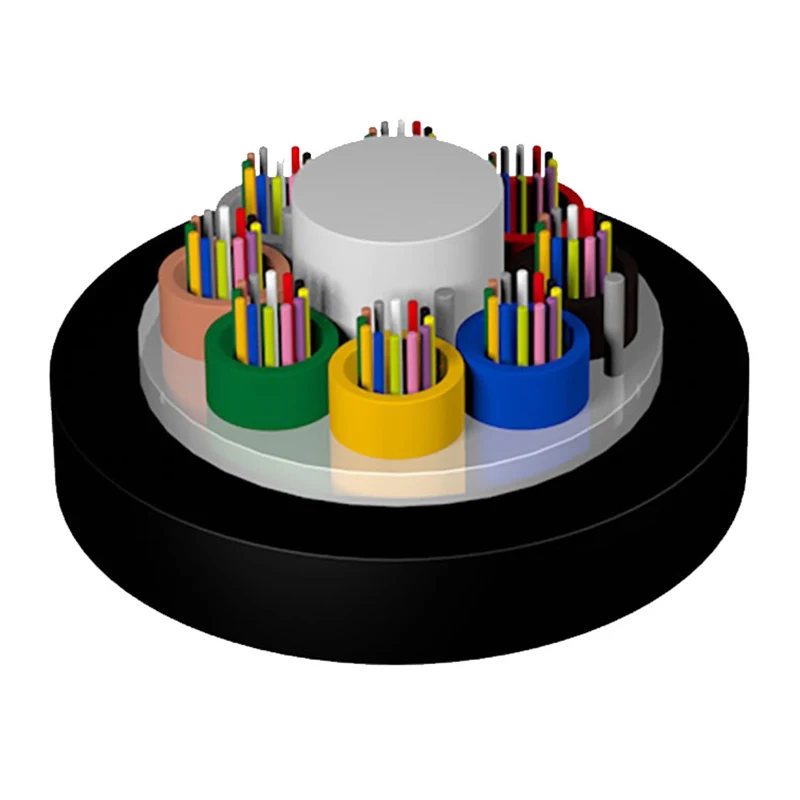
Article Summary:Stranded Non-metallic Air-blowing Micro Cables represent an advanced solution for fiber-optic installations, offering high flexibility, durability, and ease of installation. This blog delves into the characteristics, benefits, and applications of these cables, highlighting why they are increasingly popular in modern telecommunications and networking systems. With contributions from industry leaders like Xuben, we’ll also explore how these cables are transforming the infrastructure landscape.
Introduction to Stranded Non-metallic Air-blowing Micro Cables
Stranded Non-metallic Air-blowing Micro Cables are a state-of-the-art solution designed for efficient fiber optic network installations. These cables are lightweight and designed with a non-metallic structure, making them easy to install using air-blowing techniques, which significantly reduce labor costs and installation time.
Manufacturers like Xuben have developed these cables to meet the growing demands of modern telecommunications, providing both flexibility and reliability in various environmental conditions. These cables are widely used for FTTH (Fiber to the Home) networks, especially in urban areas where network installations are complex and costly.
Key Benefits of Stranded Non-metallic Air-blowing Micro Cables
Lightweight and Flexible: These cables are much lighter compared to traditional cables, making them easier to handle and install.
Non-metallic Construction: The non-metallic structure offers increased safety and durability, especially in environments prone to electrical interference.
Faster Installation: Air-blowing technology allows for faster installation compared to traditional cable laying methods, which is ideal for high-density areas.
Reduced Maintenance: Due to their durability and flexibility, these cables require less maintenance, leading to long-term savings.
Cost-Effective: With reduced installation time and fewer materials required, these cables offer a more cost-effective solution for large-scale fiber deployments.
Applications of Stranded Non-metallic Air-blowing Micro Cables
Stranded Non-metallic Air-blowing Micro Cables are versatile and can be used in various applications, including:
Telecommunications: These cables are ideal for building fiber optic networks for Internet service providers, telecom companies, and mobile network operators.
Data Centers: In high-capacity data centers, these cables are used for efficient network connections and are essential for 5G infrastructure.
Enterprise Networks: Companies looking to upgrade their internal networks use these cables for high-speed internet and data transfer.
Smart Cities: As part of urban infrastructure projects, these cables are deployed to create robust and scalable communication networks.
How to Install Stranded Non-metallic Air-blowing Micro Cables
The installation process for Stranded Non-metallic Air-blowing Micro Cables is relatively simple compared to traditional cables. It typically involves the following steps:
Preparation: Ensure that the cable route is cleared and prepared for installation. A blower system will be used to blow the cables through the ducts.
Insertion: The cable is inserted into the duct, and air is blown through to guide the cable to the desired location.
Termination: Once the cable has reached its endpoint, it is terminated and connected to the necessary hardware or infrastructure.
Testing: After installation, the network is tested to ensure that the fiber optic signals are being transmitted correctly.
Thanks to the air-blowing technology, this method significantly reduces the time and complexity involved in cable installation, making it an ideal solution for both urban and rural deployments.
Comparison with Other Cable Types
Stranded Non-metallic Air-blowing Micro Cables offer several advantages over traditional fiber optic cables and other modern cable solutions. Here's a comparison:
Feature
Stranded Non-metallic Air-blowing Micro Cable
Traditional Fiber Optic Cable
Metallic Cable
Weight
Lightweight
Heavier
Heavier
Installation Method
Air-blown installation
Manual trenching or overhead laying
Cost
Cost-effective
Expensive
Expensive
Flexibility
Highly flexible
Less flexible
Rigid
Durability
Highly durable
Moderately durable
Less durable
Frequently Asked Questions (FAQ)
Q1: What is the primary advantage of using stranded non-metallic air-blowing micro cables?
A1: The primary advantage is their lightweight and flexible nature, which allows for quick and cost-effective installation using air-blowing techniques, saving both time and money.
Q2: Can these cables be used in outdoor installations?
A2: Yes, these cables are designed to withstand harsh environmental conditions, making them suitable for outdoor installations such as urban fiber optic networks.
Q3: How does air-blowing installation work?
A3: Air-blowing installation uses a blower system to push the cable through pre-laid ducts, minimizing the need for digging or overhead work. This makes installation faster and less disruptive.
Conclusion
Stranded Non-metallic Air-blowing Micro Cables represent a breakthrough in fiber optic technology. With their lightweight, flexible design and ease of installation, they offer significant advantages over traditional cable types. These cables are ideal for a wide range of applications, from telecommunications to smart cities, and provide an efficient and cost-effective solution for modern network infrastructure.
If you’re looking to upgrade your network or explore the benefits of these advanced cables, feel free to contact us at Xuben. Our team is ready to assist you in selecting the perfect solution for your needs.
We use cookies to offer you a better browsing experience, analyze site traffic and personalize content. By using this site, you agree to our use of cookies.
Privacy Policy