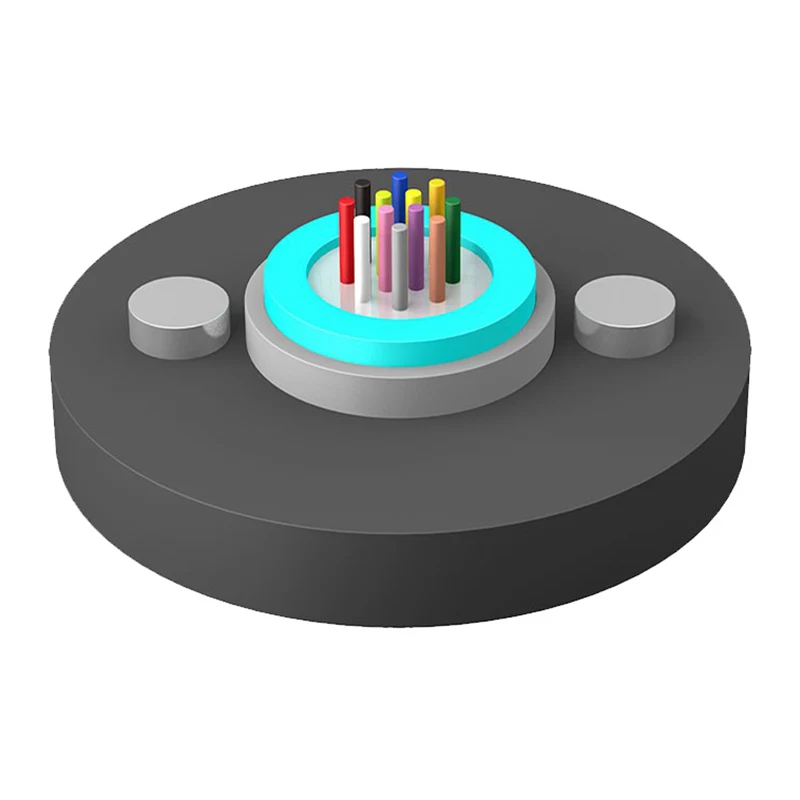
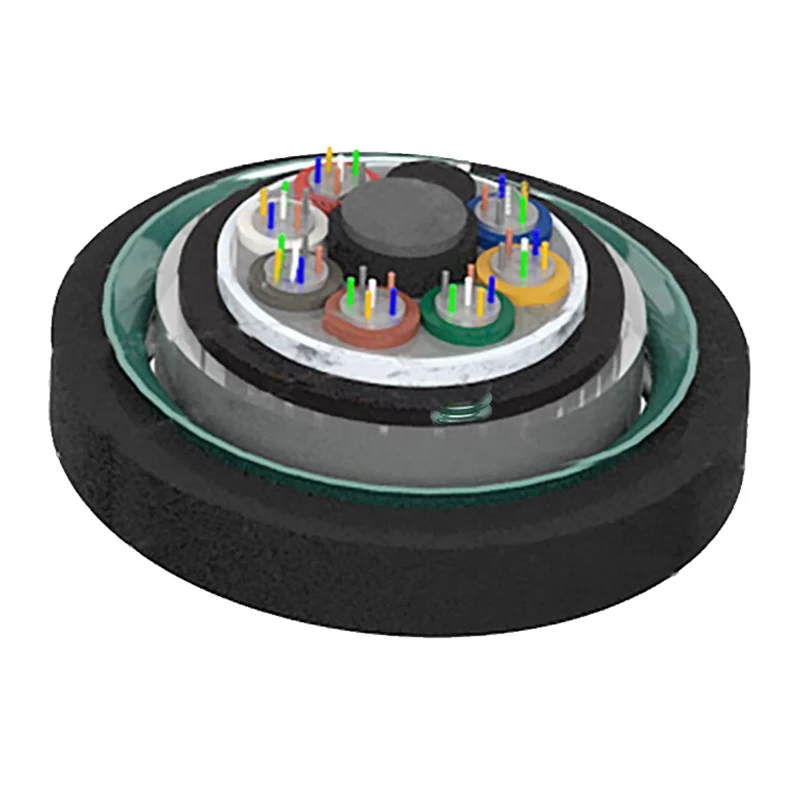
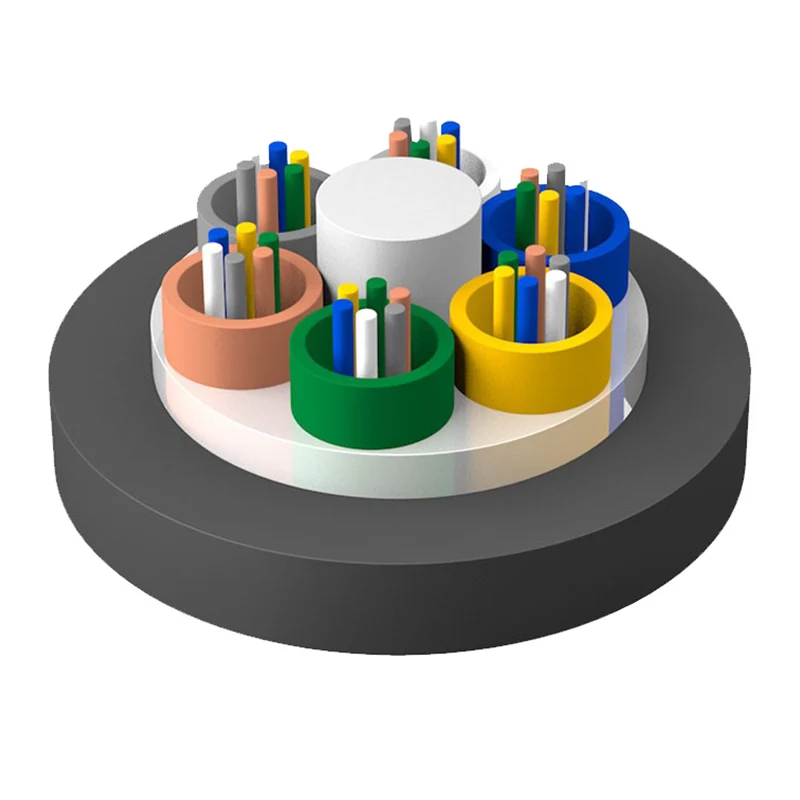
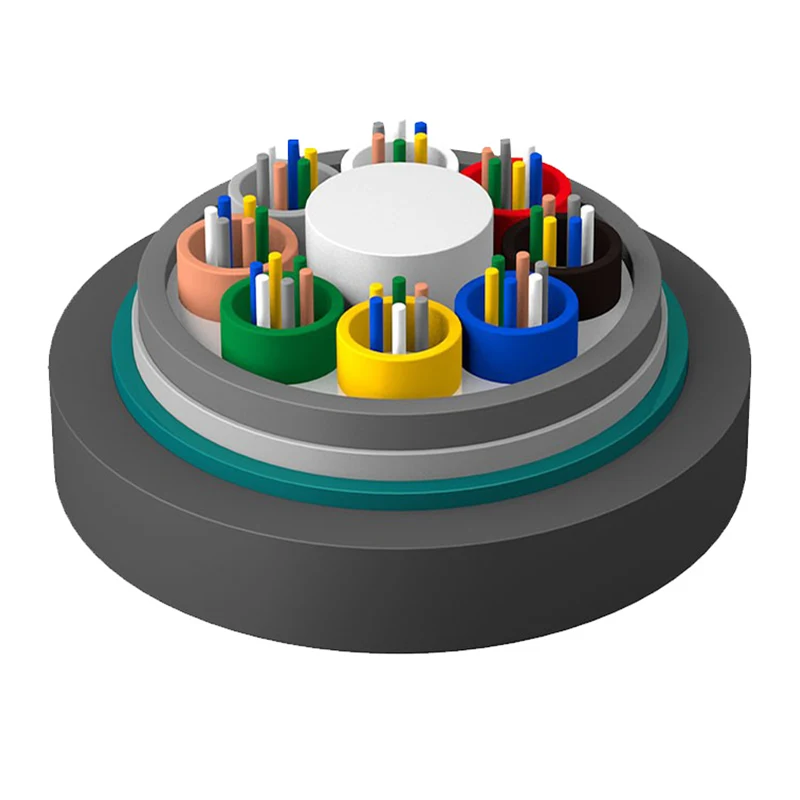
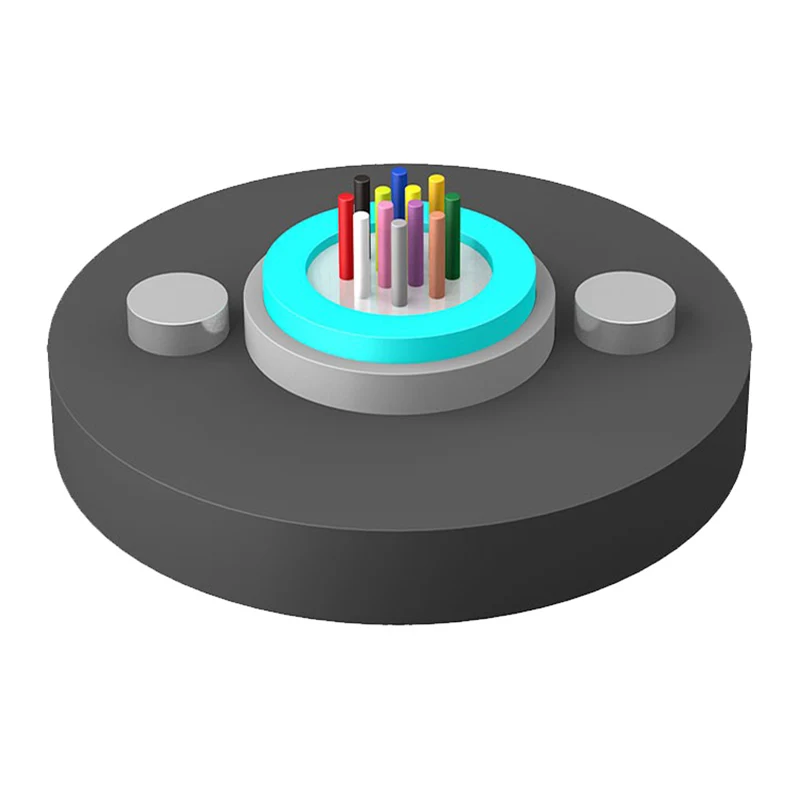
Orientalfiber Uni-tube Non-armored Fiber Optic Cable is designed for stable outdoor data transmission where lightweight structure and easy installation are required. As a China manufacturer and supplier, Orientalfiber provides this Uni-tube Non-armored Fiber Optic Cable with a loose tube structure, integrated water-blocking system, and dual steel wire reinforcement.
From a procurement perspective, choosing Orientalfiber Uni-tube Non-armored Fiber Optic Cable means working with a China factory that focuses on consistent production, controlled material quality, and scalable supply. This cable structure is suitable for distribution networks, access networks, and infrastructure projects where installation flexibility and long-term reliability are both important.
Product Structure & Design Logic
Core Structure Explanation
The Uni-tube Non-armored Fiber Optic Cable adopts a simple but practical design:
250μm optical fibers placed inside a high-modulus loose tube
Tube filled with water-resistant compound for fiber protection
Water-blocking materials applied for longitudinal sealing
Two parallel steel wires added for tensile strength
Outer PE sheath extruded for environmental protection
This structure reduces overall cable weight while maintaining mechanical strength, making the Uni-tube Non-armored Fiber Optic Cable suitable for aerial and duct installations.
Key Performance Features
Practical Advantages for Buyers
Stable mechanical performance: Designed to handle basic tensile loads during installation and operation
Temperature adaptability: Maintains performance in varying outdoor conditions
Hydrolysis-resistant loose tube: Helps extend service life in humid environments
Water-blocking design: Prevents longitudinal water penetration
UV-resistant PE sheath: Suitable for outdoor exposure
Compact structure: Easier transportation and installation
Long delivery length: Reduces joint points and installation time
Application Scenarios
Where This Cable Fits Best
The Orientalfiber Uni-tube Non-armored Fiber Optic Cable is commonly selected for:
Access network deployment (FTTH, FTTB)
Telecommunication backbone extension (short to medium distance)
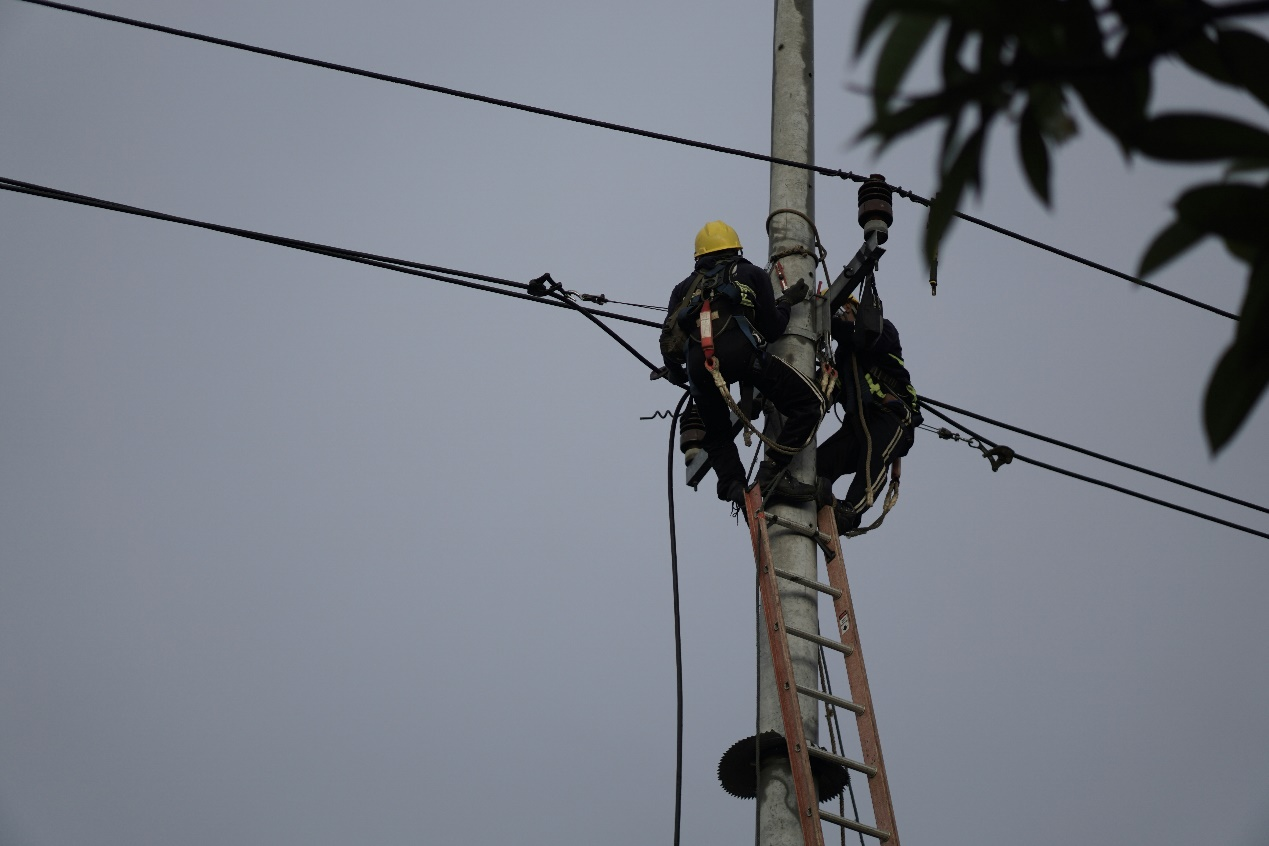
Urban and rural aerial installations
Duct-based cable laying projects
Industrial communication systems (power, railway, highway)
Cost efficiency: Non-armored structure lowers overall material cost
Transport convenience: Smaller diameter allows higher loading capacity
Project compatibility: Suitable for standard telecom installation methods
For projects without heavy mechanical risk or rodent exposure, the Uni-tube Non-armored Fiber Optic Cable offers a balanced option between performance and budget.
Standards Compliance
This Uni-tube Non-armored Fiber Optic Cable complies with YD/T 769 standard, ensuring it meets general requirements for communication optical cables used in telecom systems.
About the Manufacturer
Jiangsu Xuben Photoelectric Technology Co., Ltd
Jiangsu Xuben Photoelectric Technology Co., Ltd is a group company with four factories, which can provide customers with complete fiber optic network solutions. The company operates indoor cable, outdoor cable, ODN component, and optical network equipment manufacturing facilities, covering a total area of 15,000 square meters with an annual output value of 20 million USD.
With applications across telecommunications operators, radio and television systems, LAN data transmission, and infrastructure sectors such as power, railway, and highways, the company focuses on stable production and long-term cooperation. Certified with ISO9001 and ISO45001 systems, Jiangsu Xuben Photoelectric Technology Co., Ltd supports global buyers with consistent supply and manufacturing control.
FAQ
1. Is this cable suitable for direct burial?
No, the Uni-tube Non-armored Fiber Optic Cable is not armored, so it is not recommended for direct burial without additional protection.
2. What installation methods are recommended?
It is suitable for aerial installation and duct installation in standard telecom projects.
3. How does it perform in wet environments?
The cable includes water-blocking materials and filling compounds to reduce moisture impact during long-term use.
4. Why choose this type over armored cable?
For projects with lower mechanical risk, this structure reduces cost, weight, and installation complexity.
Technical Parameters
Cable Type
(Increased by 2 fibres)
Fibre Count
Cable Weight (Ref)
(kg/km)
Tensile Strength
Long/Short Term
(N)
Crush Resistance
Long/Short Term
(N/100mm)
Bending Radius
Static/Dynamic
(mm)
GYXY-2~12Xn
2~12
77
600/1500
300/1000
10D/20D
GYXY-14~24Xn
14~24
83
GYXY-2~12Xn
2~12
104
1000/3000
GYXY-14~24Xn
14~24
109
Storage/Operating Temperature: -40℃-+70℃
Optical Characteristics
Fibre Type
Attenuation (+20℃)
Bandwidth
Numerical Aperture
Cable Cut-off Wavelength λcc
@850nm
@1300nm
@1310nm
@1550nm
@850nm
@1300nm
G.652
---
---
≤0.36dB/km
≤0.22dB/km
---
---
---
≤1260nm
G.655
---
---
≤0.40dB/km
≤0.23dB/km
---
---
---
≤1450nm
50/125µm
≤3.3dB/km
≤1.2dB/km
---
---
≥500MHz·km
≥500MHz·km
0.200±0.015 NA
---
62.5/125µm
≤3.5dB/km
≤1.2dB/km
---
---
≥200MHz·km
≥500MHz·km
0.275±0.015 NA
---
Note:
a. Suffix Xn denotes fibre type
b. The colour arrangements of fibre and tube are specified in the colour identification table
c. The cable shouldn't store in outdoor environment more than 6 months in order to keep the cable reel good state
We use cookies to offer you a better browsing experience, analyze site traffic and personalize content. By using this site, you agree to our use of cookies.
Privacy Policy