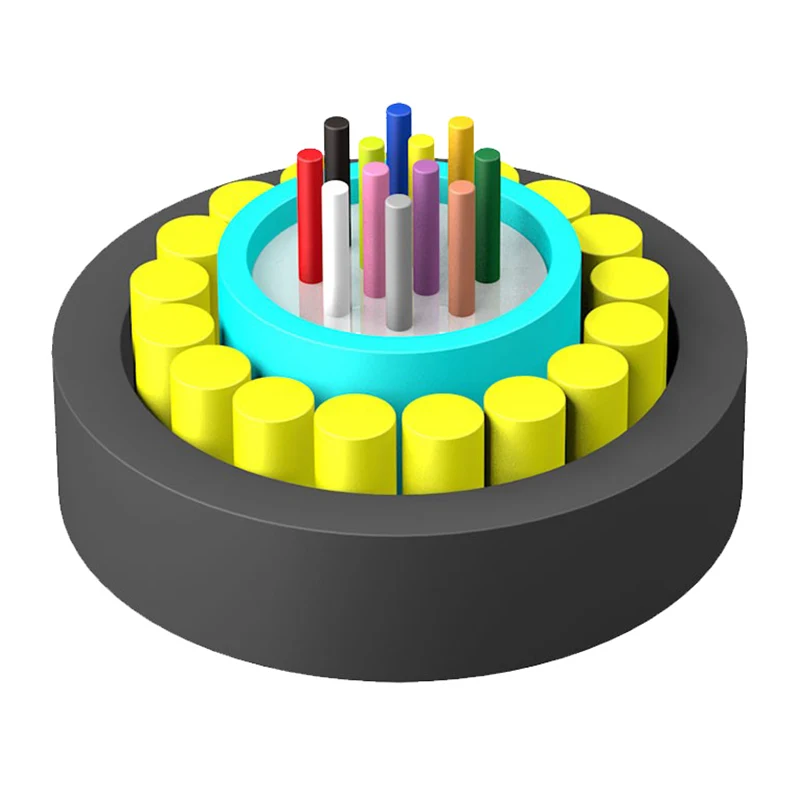
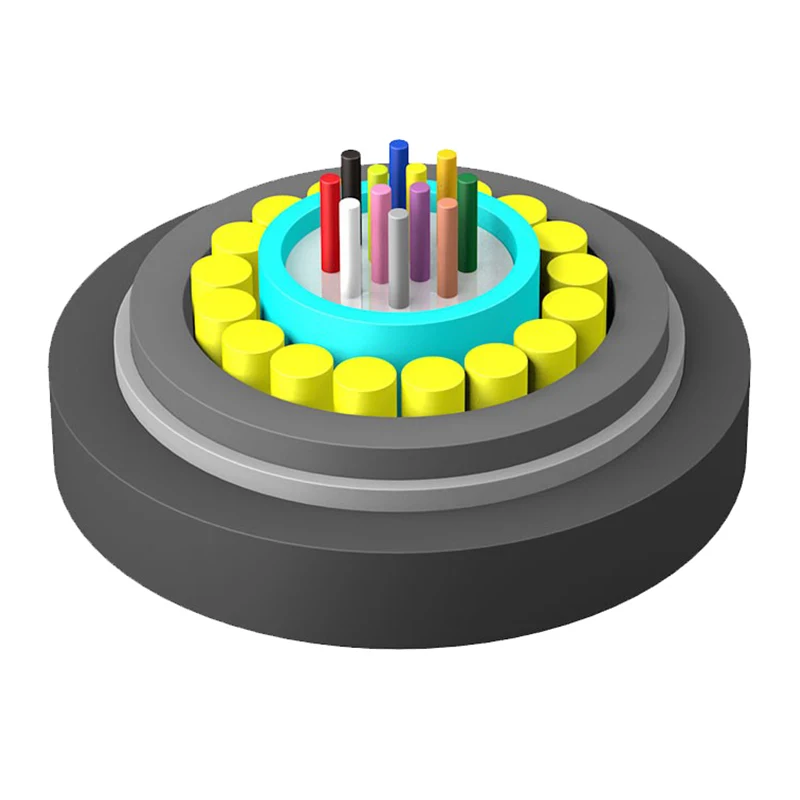
The Orientalfiber supplier's fibres, single-mode or multi-mode, are positioned in a loose tube mode of the high modulus PETG. The tubes are filled with a water-resistant filling compound. Over the tube, water-blocking material is applied to keep the cable watertight. And wrapping of fibre reinforced plastic (FRP) bars. The uni-tube non-metallic lighting anti-rodent fiber optic cable is completed with a polyethylene (PE) sheath.
As a professional seeking reliable network infrastructure, sourcing the right Uni-tube Non-metallic Lighting Anti-rodent Fiber Optic Cable is critical for long-term operational stability. Orientalfiber, backed by the extensive manufacturing capabilities of Jiangsu Xuben Photoelectric Technology Co., Ltd, provides a specialized cable design engineered to withstand harsh environmental threats. By integrating rodent protection with a fully dielectric structure, this cable ensures uninterrupted data transmission in areas prone to biological interference and electrical surges.
1. Product Overview: Defining the GYQFXTY Standard
The Uni-tube Non-metallic Lighting Anti-rodent Fiber Optic Cable (GYQFXTY) is a compact, lightweight optical fiber cable designed for duct and aerial installations. Unlike traditional armored cables that use steel tape for protection, this product utilizes a specialized layer of Fiber Reinforced Plastic (FRP) bars. This design provides a dual benefit: it acts as a physical barrier against rodent gnawing while maintaining a non-metallic, lightning-resistant profile.
2. Key Sourcing Value: Why Procurement Teams Choose Orientalfiber
Purchasing departments often face the challenge of balancing durability with installation costs. Orientalfiber addresses these procurement pain points through:
Reduced Installation Costs: The fully dielectric nature of the Uni-tube Non-metallic Lighting Anti-rodent Fiber Optic Cable means no grounding is required, saving labor time and material costs.
Supply Chain Reliability: With an annual output value of $20 million and four specialized factories, we ensure consistent lead times for large-scale engineering projects.
Certified Quality Control: Our production processes are governed by ISO9001 and ISO45001 standards, ensuring every meter of cable meets international IEC 60794-1 requirements.
3. Technical Structural Analysis
The integrity of the Uni-tube Non-metallic Lighting Anti-rodent Fiber Optic Cable lies in its multi-layered protection strategy:
Component
Material/Function
Technical Benefit
Optical Fiber
G.652D / G.657A / Multi-mode
Low attenuation and high bandwidth.
Loose Tube
High modulus PETG
Hydrolysis resistance and fiber protection.
Anti-Rodent Layer
Wrapped FRP Bars
High tensile strength and mechanical defense.
Outer Sheath
Black UV-stabilized PE
Weather resistance for outdoor longevity.
4. Core Performance Features & Advantages
In comparison to standard outdoor cables, the OrientalfiberUni-tube Non-metallic Lighting Anti-rodent Fiber Optic Cable offers specific mechanical advantages:
Lightning Immunity: The absence of metal components makes it immune to electromagnetic interference (EMI) and lightning strikes, crucial for power-line adjacent installations.
Lateral Pressure Resistance: The FRP wrapping provides superior crush resistance, protecting the inner fibers from physical deformation during burial or tight duct pulls.
Moisture Barrier: A combination of tube filling compound and water-blocking materials ensures the cable remains functional even in high-humidity or flood-prone environments.
5. Comparative Advantage: Orientalfiber vs. Traditional Armored Cables
While corrugated steel tape (CST) is a common rodent-proofing method, it adds significant weight and requires grounding. The Orientalfiber non-metallic approach provides a lighter, more flexible alternative that is easier to handle in the field without sacrificing the toughness required to deter pests.
6. Versatile Application Scenarios
The Uni-tube Non-metallic Lighting Anti-rodent Fiber Optic Cable is deployed across various industries where reliability is non-negotiable:
Telecommunications: Core and access network link-ups in rural or forest areas.
Rail & Highway: Communication systems along tracks where vibration and rodents are prevalent.
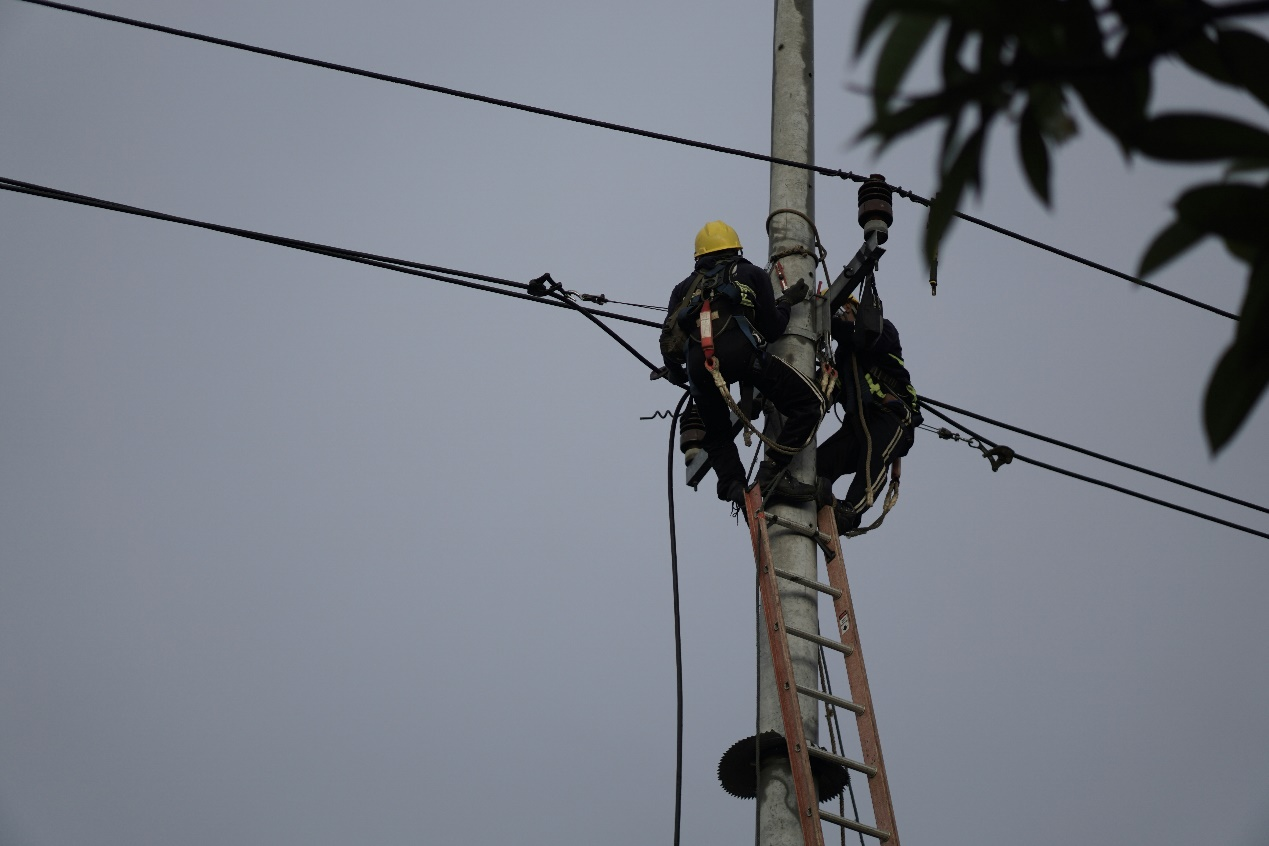
Electric Power: Safe installation on high-voltage pylons without risk of electrical conduction.
Industrial LAN: Connecting front-end equipment in heavy industrial zones.
7. Frequently Asked Questions (FAQ)
How does the cable resist rodents without metal?
The high-density wrapping of FRP (Fiber Reinforced Plastic) bars creates a hard, abrasive surface that is difficult for rodents to bite through, effectively protecting the loose tube inside.
Is this cable suitable for direct burial?
While primarily designed for duct and aerial applications, its high lateral pressure resistance allows for use in protected buried environments where non-metallic properties are required.
Can Orientalfiber provide customized fiber counts?
Yes, as a specialized manufacturer, we can configure the Uni-tube Non-metallic Lighting Anti-rodent Fiber Optic Cable with specific fiber types and counts to meet your project specifications.
Characteristics
Accuracy controlling excess fibre length provides a highly mechanical and temperature performance to the cable
High strength loose tube that is hydrolysis resistant
Special tube filling compound ensure a critical protection of fibre
Highly Lateral pressure resistance and flexibility
A layer of wrapping FRP ensured the tensile strength of the cable, has a good protection to the loose tub
The outer sheath of polyethylene has a high UV-stabilized ability
Fully dielectric cable, during the installation and operation grounding is not needed, eliminates any electronic influence or cable
Standards
GYQFXTY cable complies with Standard YD/T 769-2010 as well as IEC 60794-1.
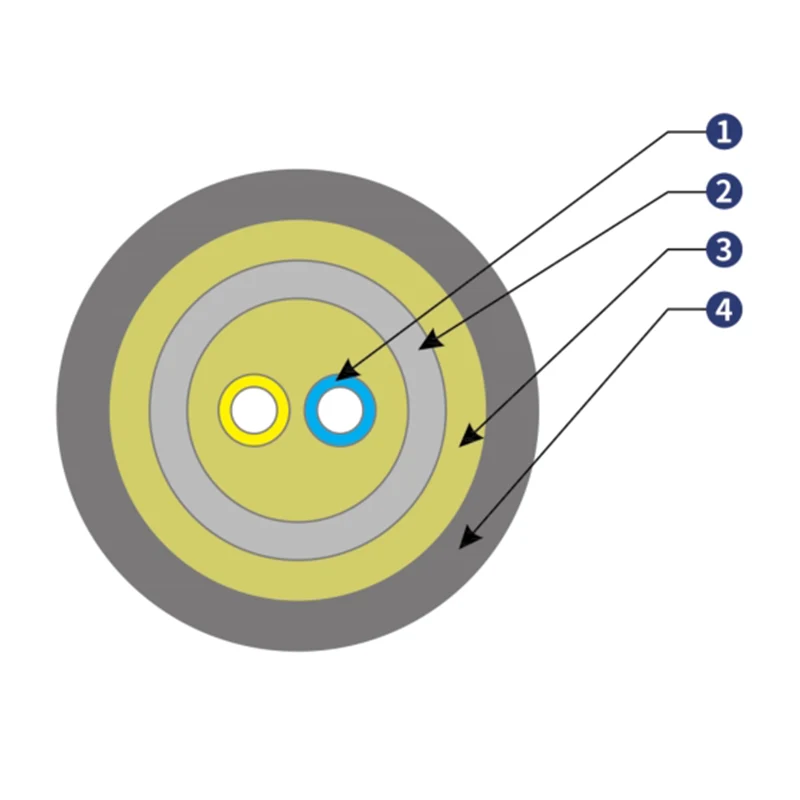
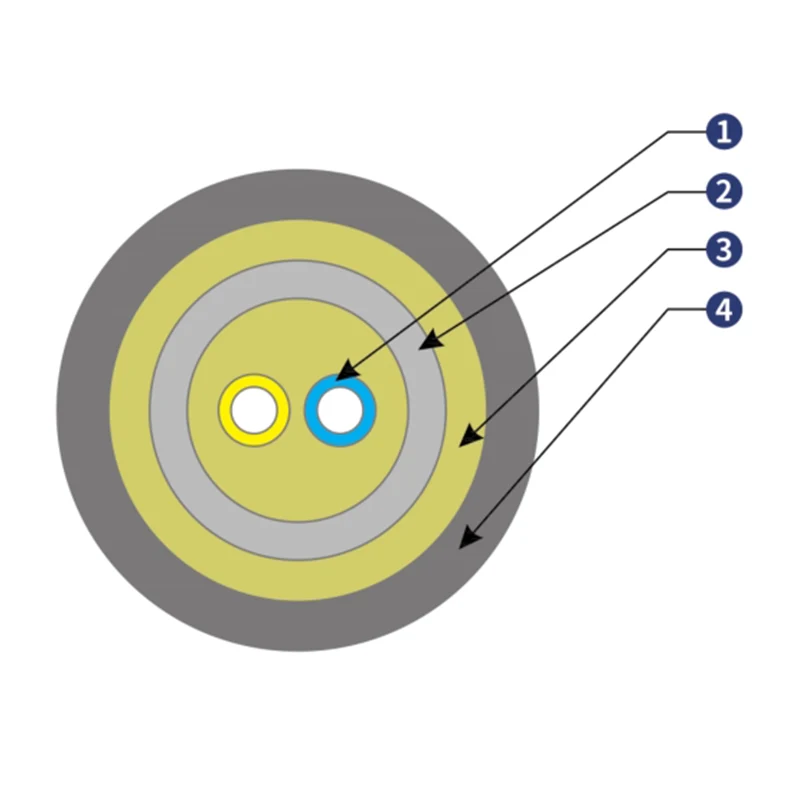
Structure Drawing
1.Fibre
2.Loose Tube
3.FRP
4.Tube Filling Material
5.Cable Filling Material
6.PE Outer Sheath
Technical Parameters
Cable Type
(Increased by 2 fibres)
Fibre Count
Cable Weight (Ref)
(kg/km)
Tensile Strength
Long/Short Term (N)
Crush Resistance
Long/Short Term (N/100mm)
Bending Radius
Static/Dynamic (mm)
GYQFXTY-2~12Xn
2~12
66
600/1500
300/1000
10D/20D
GYQFXTY-14~18Xn
14~18
79
GYQFXTY-26~36Xn
26~36
86
Storage/Operating Temperature: -40℃-+70℃
Optical Characteristics
Fibre Type
Attenuation (+20℃)
Bandwidth
Numerical Aperture
Cable Cut-off Wavelength λcc
@850nm
@1300nm
@1310nm
@1550nm
@850nm
@1300nm
G.652
---
---
≤0.36dB/km
≤0.22dB/km
---
---
---
≤1260nm
G.655
---
---
≤0.40dB/km
≤0.23dB/km
---
---
---
≤1450nm
50/125µm
≤3.3dB/km
≤1.2dB/km
---
---
≥500MHz·km
≥500MHz·km
0.200±0.015 NA
---
62.5/125µm
≤3.5dB/km
≤1.2dB/km
---
---
≥200MHz·km
≥500MHz·km
0.275±0.015 NA
---
Note:
a. Suffix Xn denotes fibre type
b. The colour arrangements of fibre and tube are specified in the colour identification table
c. The uni-tube non-metallic lighting anti-rodent fiber optic cable shouldn't store in outdoor environment more than 6 months in order to keep the cable reel good state
Application: Duct/Aerial
Hot Tags: Uni-tube Non-metallic Lighting Anti-rodent Fiber Optic Cable
We use cookies to offer you a better browsing experience, analyze site traffic and personalize content. By using this site, you agree to our use of cookies.
Privacy Policy