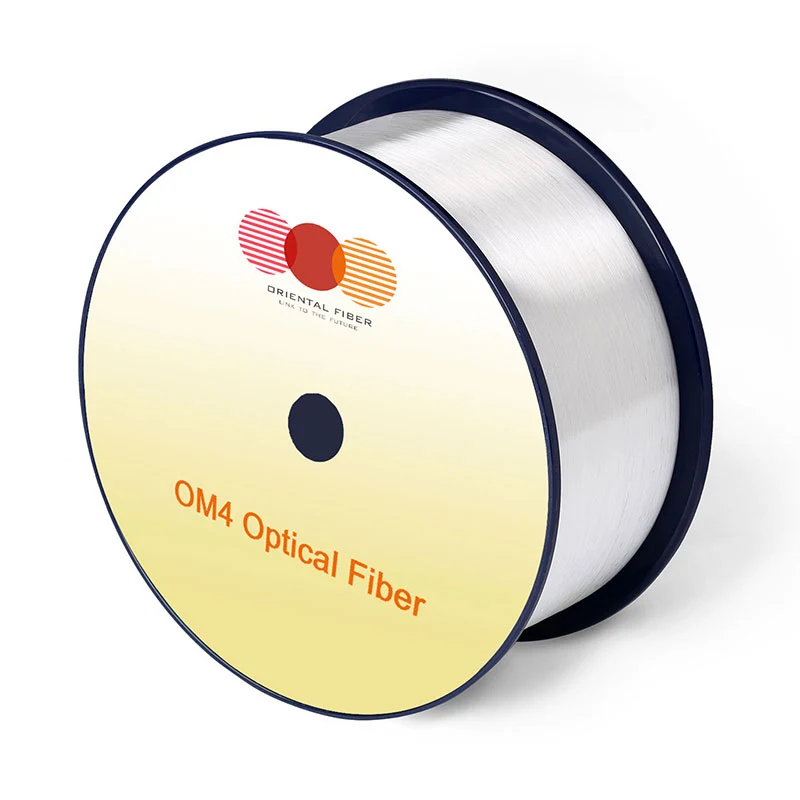
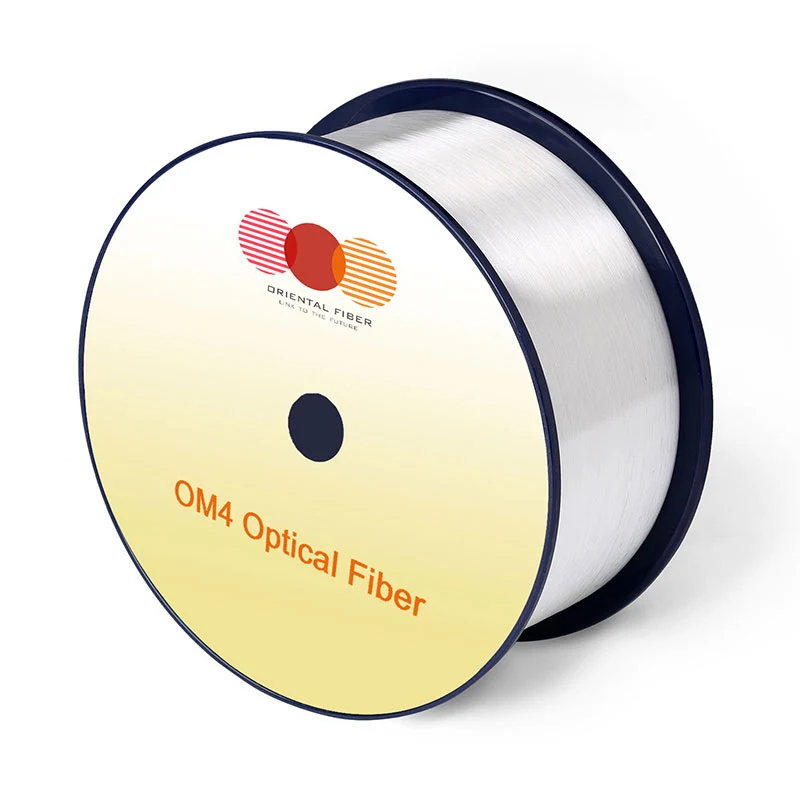
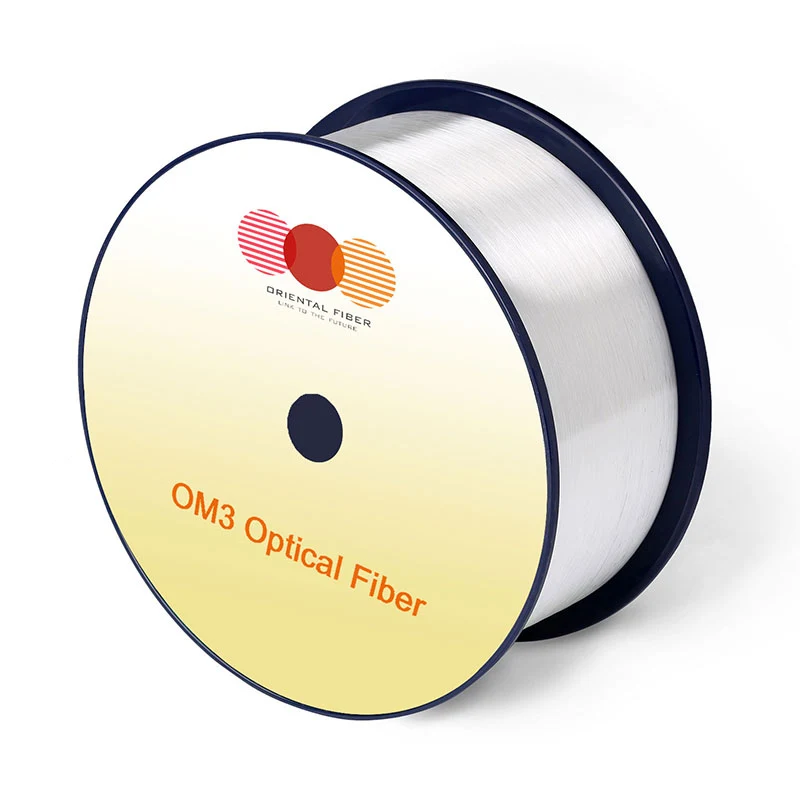
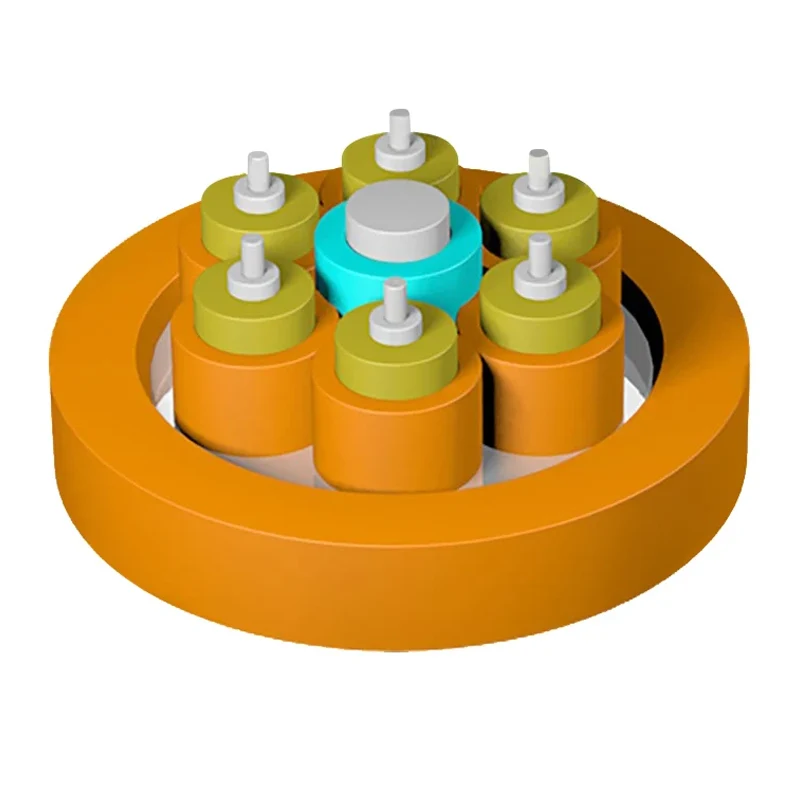
Multi-mode optical fiber OM4 is product from Orientalfiber Manufacturer, it is designed for 100G/channel and terabit BiDi technology, providing high bandwidth in the 850nm - 870nm and 910nm wavelength range. It can compensate for the signal attenuation caused by the center wavelength offset of 100G/channel transceivers, ensuring smooth upgrade of data centers to 400G, 800G and higher data rates. It is fully backward compatible with traditional OM4 and OM5 fibers.
The rapid evolution of cloud computing and AI-driven traffic necessitates a robust physical layer capable of handling terabit-scale speeds. Orientalfiber offers a premium Multi-mode Optical Fiber OM4 specifically engineered for 100G/channel and beyond. As a flagship product of Jiangsu Xuben Photoelectric Technology Co., Ltd, this fiber provides the critical bandwidth required in the 850nm to 910nm range, supporting BiDi technology and ensuring a seamless migration path for data centers transitioning to 400G, 800G, and even 1.6Tb/s Ethernet.
PCVD Precision: Mastering Modal Dispersion for Terabit Speeds
At the speeds required by modern high-performance computing centers, even the slightest deviation in the fiber core can lead to signal failure. The Multi-mode Optical Fiber OM4 from Orientalfiber is manufactured using the advanced Plasma Chemical Vapor Deposition (PCVD) process to ensure total signal integrity.
Ultra-Fine Refractive Index Profiling: By controlling the glass deposition at a molecular level, we achieve a near-perfect graded-index profile. This significantly reduces Differential Mode Delay (DMD), which is the primary bottleneck for high-speed multi-mode transmission.
Wavelength Offset Compensation: Our Multi-mode Optical Fiber OM4 is optimized to compensate for signal attenuation caused by the center wavelength offset of high-speed transceivers, ensuring stable performance across the 850-870nm and 910nm windows.
Superior Geometric Uniformity: Precise core-to-cladding concentricity ensures that every connection point maintains the lowest possible insertion loss, a vital factor when deploying dense MPO/MTP cabling systems.
Strategic Procurement Value: Future-Proofing Modern Infrastructure
For procurement managers and network architects, sourcing Multi-mode Optical Fiber OM4 from Orientalfiber addresses the critical need for scalability while managing long-term capital expenditure.
1. Seamless Upgradability to 800G and 1.6Tb/s
The networking industry is moving toward 100G-per-lane architectures. Our Multi-mode Optical Fiber OM4 is specifically designed to support these high-bit-rate systems, allowing data center operators to upgrade their active equipment without having to replace the underlying fiber plant.
2. Broad Backward Compatibility
Infrastructure longevity is enhanced by the fact that our fiber is fully backward compatible with legacy OM4 and OM5 standards. This allows for a hybrid deployment approach, where new Multi-mode Optical Fiber OM4 links can coexist with existing fiber runs, simplifying the expansion of local area networks and data storage networks.
3. Trusted Manufacturing via Jiangsu Xuben Photoelectric Technology Co., Ltd
By partnering with us, you leverage the strength of a group company with an annual output of 20 million US dollars. Across our 15,000 square meters of production space, we operate four specialized factories. This ensures that the Multi-mode Optical Fiber OM4 you receive is part of a holistic solution, compatible with our own ODN components and indoor/outdoor cables.
Compliance and Performance Characteristics
Optimized for 100G/Lane: Engineered for the most demanding 100G, 400G, and 800G transmission systems.
Low Attenuation: Minimizes signal loss over longer multi-mode reaches, maximizing the link budget for high-speed optics.
Global Standard Adherence: Meets or exceeds ISO/IEC 11801-1 OM4, IEC 60793-2-10 A1-OM4, and TIA-492AAAF specifications.
Mechanical Durability: Coated with a specialized dual-layer UV-cured acrylate for long-term reliability in high-density environments.
Core Applications in High-Performance Sectors
The high-bandwidth capabilities of Multi-mode Optical Fiber OM4 make it the standard choice for:
Hyperscale Data Centers: Supporting massive east-west traffic and high-density patching.
High-Performance Computing (HPC): Enabling low-latency connections between server clusters.
Enterprise Office Centers: Providing a robust backbone for modern unified communications and cloud services.
Industrial Front-end: Ensuring high-speed data transmission for rail transit and power grid monitoring systems.
Technical FAQ for Project Engineering
How does Orientalfiber OM4 support BiDi (Bidirectional) technology? Our Multi-mode Optical Fiber OM4 is optimized for both the 850nm and 910nm ranges. This dual-wavelength optimization is essential for BiDi transceivers, which transmit two channels over a single strand of fiber, effectively doubling the capacity of your existing cabling.
Why is Low DMD (Differential Mode Delay) so important for 400G/800G? As data rates increase, the "time window" for signal pulses gets smaller. High DMD causes pulses to spread out and overlap, leading to bit errors. Orientalfiber uses the PCVD process to keep DMD at an absolute minimum, ensuring clear signal recognition at terabit speeds.
What is the advantage of buying from a group company like Jiangsu Xuben Photoelectric Technology Co., Ltd? We provide a complete network ecosystem. Because we also manufacture the cables and ODN components, we can guarantee that the Multi-mode Optical Fiber OM4 performs optimally within the final installed environment, backed by ISO9001 and ISO45001 quality certifications.
Applications
● Data centers
● Office centers
● Data storage networks
● Local area networks
● High-performance computing centers
● 10&40&100&400&800 Gb/s and 1.6Tb/s Ethernet
Standards
OM4 ultra-bend-insensitive multimode fiber meets or exceeds the ISO/IEC 11801-1 OM4 specification, IEC 60793-2-10 A1-OM4 specification, and TIA-492AAAF A1-OM4 specification.
Characteristics
● Optimized for 100G/Lane transmission systems
● Efficient modal bandwidth at wavelengths ranging from 850-870nm and 910nm
● Backward compatible with legacy OM4 fiber
● Excellent geometric uniformity
● Low attenuation
● High bandwidth
● Low differential mode delay (DMD)
Specifications
Characteristics
Conditions
Specified
Values
Units
Geometry Characteristics
Core Diameter
--
50±2.5
[μm]
Core Non-Circularity
--
≤5.0
[%]
Cladding Diameter
--
125.0±1.0
[μm]
Cladding Non-Circularity
--
≤0.6
[%]
Coating Diameter
--
245±7
[μm]
Coating/Cladding Concentricity Error
--
≤10.0
[μm]
Coating Non-Circularity
--
≤6.0
[%]
Core/Cladding Concentricity Error
--
≤1.0
[μm]
Delivery Length
--
up
to 17.6
[km/reel]
Optical Characteristics
Attenuation
850nm
≤2.4
[dB/km]
910nm
≤2.0
[dB/km]
1300nm
≤0.6
[dB/km]
Overfilled Modal Bandwidth
850nm
≥3500
[MHz·km]
1300nm
≥500
[MHz·km]
Effective Modal Bandwidth
850nm-870nm
≥4700
[MHz·km]
910nm
≥3100
[MHz·km]
Link Length
800GBase-SR8
100
[m]
800GBaseSR-4.2
100
[m]
Numerical Aperture
--
0.200±0.015
--
Group Refractive Index
850nm
1.482
--
1300nm
1.477
--
Zero Dispersion Wavelength, λ0
--
1295-1340
[nm]
Zero Dispersion Slope,S0
1295nm≤λ0≤1310nm
≤0.105
[ps/(nm2·km)]
1310nm≤λ0≤1340nm
≤0.000375(1590-λ0)
[ps/(nm2·km)]
Macrobending Loss1
--
--
--
2 Turns @ 15 mm Radius
850nm
≤0.1
[dB]
1300nm
≤0.3
[dB]
2 Turns @ 7.5 mm Radius
850nm
≤0.2
[dB]
1300nm
≤0.5
[dB]
Backscatter Characteristics
1300nm
Step(Mean of Bidirectional Measurement)
--
≤0.10
[dB]
Irregularities Over Fibre Length and
Point Discontinuity
We use cookies to offer you a better browsing experience, analyze site traffic and personalize content. By using this site, you agree to our use of cookies.
Privacy Policy